

• Skip to primary navigation
  • Skip to main content
  • Skip to footer
Greentarget

Greentarget

  • Our Culture
    • How We Work
    • Vision & Values
    • Diversity, Equity, Inclusion and Belonging
    • Careers
      • Internships
  • Industries
    • Professional Services
    • Legal
    • Accounting
    • Commercial Real Estate
    • Financial Services
    • Management Consulting
  • Services
    • Earned Media Influence
    • Research & Market Intelligence
    • Content & Editorial
    • Digital Strategy
    • Crisis Communications
    • Executive Positioning
  • Insights
  • Our Manifesto
  • About Us
    • Meet the Team
    • Awards
    • Contact Us
  • Connect

PR professionals, journalists

April 28, 2026 by Joe Eichner

AI isn’t replacing PR. It’s reshaping it. Insights from AMEC’s North American AI Day reveal that, for B2B communications teams, success now depends on building trust, optimizing for generative engine optimization (GEO), and positioning executives as credible voices across AI-influenced channels.

When Microsoft released its landmark study, Working with AI: Measuring the Applicability of Generative AI to Occupations, detailing the careers most likely to be affected by generative AI, PR specialists landed in the (unfortunate) top 25, ranking a few decimal points worse than geographers and brokerage clerks—and not far behind writers, historians, and translators, who topped the list. 

Who can really argue? After all, three in four PR pros have already incorporated AI into their workflows, according to Muck Rack’s The State of PR 2025 report, up from 28% in 2023. At Greentarget, our team uses one AI tool for trends research and writing support, another for automated notetaking, and still others for reporting and measurement. 

Though AI may not be “replacing” us as many fear, its widespread adoption does beg the question of what the unique value of experienced B2B PR teams will be as traditional search traffic declines, newsrooms lay off staff, and anyone with a laptop can publish AI-generated content. 

To find some answers, I went to the International Association for Measurement and Evaluation of Communication’s (AMEC) latest AI Day conference in New York—and discovered that, rather than rendering us redundant, today’s AI-powered business landscape may just make PR more important than ever. 

Here are three key reasons why. 

1. PR pros are the “trust architects” of the AI era 

Hype cycles tend to make ambitious promises, and generative AI is no different. Who needs a PR agency—or a writer, or even a geographer—with this genius-seeming chatbot at your fingertips? 

Plenty of people, it turns out (or I, for one, would not be writing this right now). After all, PR pros have always been in the business of shaping or directing storylines from the swirling flow of news, gossip, data, and rhetoric. Ideally, as the “father of PR” Ivy Lee noted back in 1906, this work occurs out in the open, with accuracy, and in the public interest: if you can’t trust the source, it all falls apart. 

One way of looking at PR’s role, then—especially in a moment where credibility is harder and harder to come by—is as a reliable filter for the deluge of information hitting our inboxes and feeds each and every day. PR pros can tell clients (and their key audiences) what it all means, why it’s important, and how we should engage with this information. 

We can analogize this shift within AI systems themselves. In 2022 and 2023, “prompt engineering” was all the rage: What do we ask the LLM to do to get the desired result? Now, as these tools look to orchestrate an increasing amount of material—from different applications, data sources, research platforms, etc.—it’s all about “context engineering.” If prompt engineering drew on our ability to, say, ask a good interview question, the latter is more akin to providing a briefing book for that interview. 

The bottom line? In the AI era, PR pros become sorely needed trust architects who can cement organizational credibility by contextualizing heaps of data—not only to help their clients rise above the noise, but to help them get the most out of today’s AI tools.
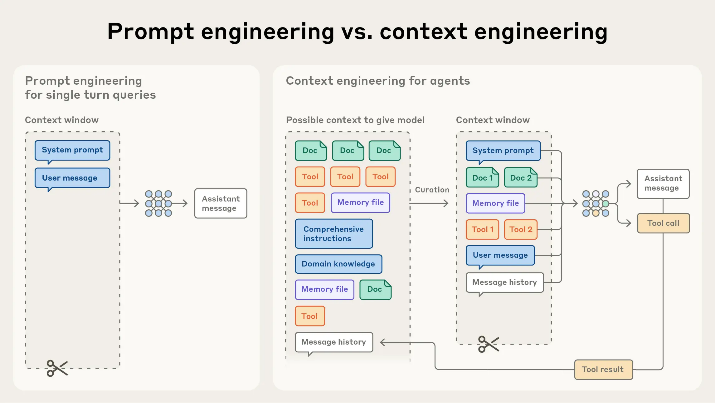
Diagram showing the difference between prompt engineering and context engineering in LLMs.
The differences between prompt engineering and context engineering. PR pros are well-positioned to understand what context to give the model—and what guidance to give clients based on its output. (Source: Anthropic )

2. AI-powered LLMs represent a new audience that PR pros know how to reach 

When the release of ChatGPT made LLMs accessible to anyone with a laptop or phone the doomsdayers soon followed. What’s the point of good ol’ fashioned media relations if a bot can write your pitch and traditional search traffic is on the skids? 

Though as with so many “unprecedented” disruptions, the more things change, the more things stay the same. LLMs have fast become just one more audience that organizations need to reach, albeit a critical one. 

Fortunately, it turns out the bots like a lot of the same things as traditional SEO. Chief among them: earned media attention. As noted in a report from comms specialists Hard Numbers and Onclusive  shared during the AMEC conference, LLMs recommend brands with a strong media footprint up to 80% of the time. 

This is what’s new: to rank in the AI era, organizations must pair earned media efforts with owned content that’s optimized for GEO. Listicles, FAQs, and comparison articles push you higher, which is one reason why I’m writing this article (!). GEO-ready webpages—with clear subheads, summary boxes, credentialing, and structured metadata—only bolster these efforts. 

At the same time, as audiences become more attuned to the look and feel of AI-generated content, we can’t forget the human touch. Human-written content still dominates Google’s top rankings, while professional services firms’ businesses are built on human expertise—that is, no one wants to hire a thought leader who doesn’t have any of their own thoughts. As CARMA’s Insights & Consulting Director Jennifer Sanchis put it at the conference, “The future is personal branding and proof of humanity.” 


To sum up, catching LLMs’ attention still requires a human touch to create and share consistent, differentiated messages across numerous channels in ways that AI bots can easily recognize. PR teams are perfectly suited to do just that. 

3. AI creates new PR opportunities 

AI is also generating new opportunities for PR teams and their clients, according to AMEC AI Day presenters. For instance: 

Messaging around AI itself is a new must-have, particularly for B2B firms. A CARMA UK report discussed at the event highlights a crucial trendline: CEOs, more than academics or media or government, are most responsible for driving positive media narratives about AI benefits. 

That’s a real opportunity for professional services firms, particularly seeing as their clients crave guidance on AI and amid ongoing controversies about AI use in the workplace. Yet while 86% of Fortune 250 CEOs regularly reference AI, only half are viewed as credible, according to a new report. Those who link AI to products, customer outcomes, or workforce re-skilling, however, received sentiment scores that are almost four times higher than their peers. 

LinkedIn is full of untapped potential for B2B executives. There was a lot of talk in the early days of LLMs about the need for executives to get on platforms like Reddit to ensure discoverability. But presenters at AMEC’s AI Day conference took pains to illustrate that LinkedIn has made a comeback: as one recent study shows, LinkedIn is now the most-cited domain for professional queries in AI search. 

Erin Lanuti, Co-Founder and CEO of Lilypath, took it a step further, calling on executives to build their “authority intelligence” on LinkedIn by ensuring that AI can accurately interpret one’s professional credibility on the platform. Interestingly, C-suite executives—even those with robust profiles—are often misclassified, in large part because the LLMs are flooded with too much information and don’t know how to sort it. PR teams can help develop execs’ authority intelligence on LinkedIn, while creating the types of content that can further buttress it. 

Proactive crisis comms may soon become a reality. As representatives from LexisNexis pointed out, the big problem for PR is that it is reactive; AI, on the other hand, is built for prediction. 

What might this entail? Could PR teams, equipped with the right data and AI tools, predict potential crises and help business leaders prepare messaging in advance? 

The LexisNexis speakers say yes—and used the collapse of Silicon Valley Bank as one example. Had SVB’s leadership been able to connect the dots between a constellation of data points—financial filings that showed mounting unrealized losses, credit rating downgrades, a Chief Risk Officer vacancy—they might have had six to 12 months of additional lead time before the failure hit.  

The future of PR may look like a (less Tom Cruise-y) version of Spielberg’s Minority Report, where comms teams can stop, or at least prepare for, crises before they happen. 

From Visibility to Credibility: PR’s Next Chapter

In many ways, AI is doing what every major technological shift has done before it: changing how information is created, distributed, and consumed. But it’s not eliminating the need for PR. It’s just raising the stakes.

For B2B organizations, particularly in complex and high-trust sectors like legal and consulting, visibility alone is no longer enough. The firms that win in the AI era will be those that can shape credible narratives, show up consistently across both human and machine-driven channels, and position their leaders as authoritative voices in an increasingly crowded information ecosystem.
April 10, 2026 by Lisa Seidenberg

Search traffic is declining, AI is rewriting discovery, and publishers are evolving. Here’s how firms can build authority, visibility, and credibility in the new media landscape. 

Journalism is facing a near-existential challenge. Legacy newsrooms are contracting, search traffic is eroding, and AI is rapidly reshaping how people find and consume information.  

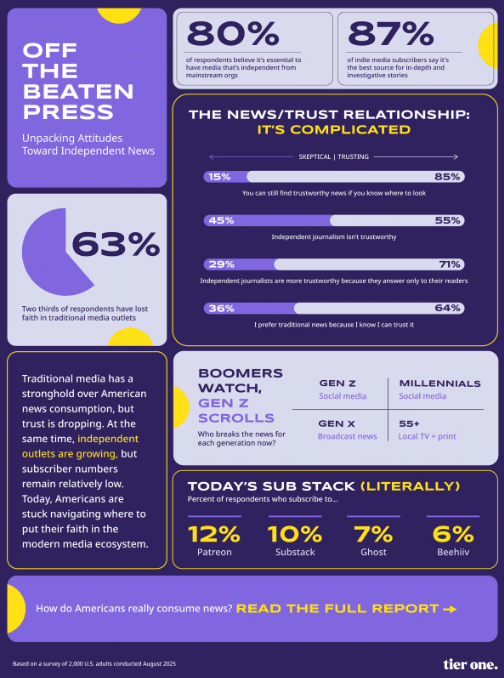
According to the latest report from the Reuters Institute for the Study of Journalism, publishers expect search referrals to fall by more than 40% over the next three years. At the same time, audience behavior has fundamentally changed: Half of the news readers surveyed by marketing agency Tier One last year now cite social media as a primary news source, with that figure climbing sharply among younger audiences.  

On the surface, this all may sound bleak. But taken together, these shifts don’t signal the end of journalism. They signal a reset. The professional services and PR firms who understand this new landscape will be well-positioned to use it to their advantage in gaining influence in the AI era.  

How Publishers are Responding—and the Opportunity for Credible  Voices from Professional Services Firms 

Crucially, the aforementioned Tier One report shows that audiences aren’t abandoning trusted media. Instead, they’re looking towards multiple sources, from local and broadcast news to social media to traditional print and online outlets, as well as a fast-growing ecosystem of independent journalism on platforms like Substack.  

In other words, people still want credible information. But they don’t want it from a single source or in a single format. And that insight is reshaping publisher strategy, creating new opportunities for subject matter experts in the professional services realm. Consider the following:  

Publishers are ensuring their content has a human touch, including the use of subject matter experts.  

“If we want to win the trust of our readers back, and their clicks along with it, we must lean instead into what AI cannot be: human,” said Susie Cagle, enterprise editor of The San Francisco Standard, in her Nieman Labs media prediction for 2026. “That means providing readers not just with news they know is real and sourced, but with unique storytelling, experience, community, and connection.” 

Publishers are choosing depth over scale.  

Rather than trying to out-optimize algorithms or chase back lost traffic, media outlets are pivoting to fewer stories, more original reporting and analysis, and stronger audience relationships through subscriptions, newsletters, events, podcasts, and owned channels.  

Naturally, experts with sharp perspectives and insights will be invaluable to fleshing out such in-depth reportage.   

“Journalism’s best response is to double down on the things that make us valuable and unique,” Taneth Evans, Head of Digital at The Wall Street Journal, says in the Reuters Institute report. “This year has seen most waking up to the importance of quality, originality, and direct, meaningful relationships with our audiences.” 

Publishers are turning to new formats, creating more venues for B2B SMEs to share a compelling POV.  

According to the Reuters Institute Survey, nearly 80% of publishers plan to invest more in video; more than 70% said the same about audio formats. Both, after all, are harder for AI to scrape, summarize, and commoditize. 

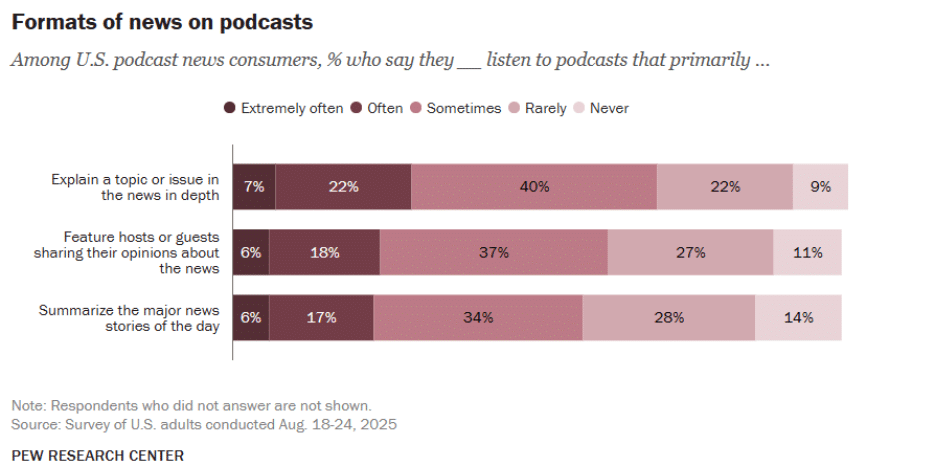
Podcasts in particular offer an excellent (and intimate) format for thought leadership and credible B2B voices. A 2025 Pew Research study found that about a third of U.S. adults get their news from podcasts at least some of the time. In this group, most listen to three types of podcasts: ones that primarily explain a topic or issue in the news in depth; ones that feature hosts or guests sharing their opinions on the news; and ones that primarily summarize the major news stories of the day—all areas where thoughtful and media-trained SMEs can weigh in.  

Earned Media Shapes AI Discoverability 

Despite declining traditional search traffic, earned media opportunities for professional services firms—like those noted above—still matter in the AI era.  

According to a recent Muck Rack report, roughly a quarter of AI citations come from journalistic sources, with the rest drawn from unpaid, third-party coverage. Even press releases are cited more often when they’re data-driven, clearly written, and objectively framed. 

Two signals matter most to large-language models: 

  • Authority: both overall outlet reputation and topic-specific credibility 
  • Recency: AI strongly favors fresh, trustworthy information 

In sum, PR and earned media outreach doesn’t disappear in an AI-first world. Where and how brands earn credibility increasingly determines not only media visibility but also how they appear in AI-generated answers. 

In the AI Era, Expertise Isn’t Dead. It Just Has to be Demonstrated  

Whether writing a quick quote or investigating a complex technical issue, journalists must constantly decide whose knowledge is relevant, how much authority to grant it, and how to present it responsibly to the public.   

Given the current media environment—where politicians, creators, and influencers are increasingly dismissive of experts—journalist Jon Kåre Time felt the timing was right to research how journalists can improve their relationships with such experts.   

His big takeaway? In today’s climate, credentials alone no longer grant authority. Experts are increasingly politicized or dismissed, and trust must be earned in public. In short, authority isn’t assumed; it needs to be demonstrated.   

This is good news for Greentarget’s professional services clients, given that creating positions of authority is our specialty. We counsel our clients on actionable steps they can take to be heard in a way that helps audiences discover solutions to complex business problems and create door-opening conversations with reporters (and prospective clients).  

What This Means for B2B Leaders  

In an AI-saturated environment, the brands, firms, and voices that break through are those that are aligned with what publishers value now: originality, human judgment, and relevance.   

The B2B organizations that succeed next year will do the same, investing in depth over noise and playing the long game in a landscape where trust is the most valuable asset left.   

For PR practitioners like us, the new playing field means a return to the basics when building relationships with reporters. AI tools can assist with pitching and research, but relationship building remains human work. In 2026, we will prioritize empathy and connection, taking time to understand a reporter’s interests, anticipate their coverage plans, and offer actionable insights from authorities that will resonate with their target audiences.  

For law firms, consultancies, and other professional services organizations, the opportunity lies in helping readers understand what’s known, what isn’t, and why it matters right now—while imbuing insights with a genuinely human, authentic touch.  

As journalism hits the reset button, the most effective spokespeople won’t just deliver rote answers. They’ll show they’re thinking. Greentarget can help.  

July 23, 2025 by Lisa Seidenberg

In this two-part series, journalism professor and former Wall Street Journal reporter Amy Merrick unpacks two influential trends reshaping the media landscape: source transparency and generative AI. From The Washington Post’s hotly debated “From the Source” pilot to the opportunities and risks of AI in journalism, the conversation examines how newsrooms are experimenting with new ways to build trust, efficiency and engagement in an era of rapid technological change. 

How the Washington Post’s “From the Source” Could Redefine Media Transparency: A Q&A with Chicago Journalism Educator Amy Merrick 

This is the first article in the series. 

News that The Washington Post is launching a new system that allows people quoted in some articles to add annotations after publication ignited a firestorm of debate across the media landscape. Commenters suggested the program could enable attacks on the reporting (or the reporter), amplify misinformation, allow sources to walk back quotes, or simply provide a platform for self-interested promotion. 

The goal of the “From the Source” system is to encourage readers to engage in on-site conversations rather than shifting to social media platforms. The initiative also comes as other pressures weigh on media outlets as they confront profound economic challenges to their business model—including the explosive growth of generative AI, with chatbots and GenAI search results tanking traffic to news sites from traditional search referrals.   

To unpack the implications of it all, we caught up with Amy Merrick, a senior professional lecturer at DePaul University’s College of Communication and former reporter for The Wall Street Journal. Merrick is a faculty adviser to the school’s 14 East magazine and its Society of Professional Journalists chapter. She includes discussions on the impact of AI as part of her syllabus and recently enrolled in a master’s program in computer science in order to understand what AI means for journalists and help her students get ready for what’s next. 

We talked with Merrick about the significance of the Post’s new offering and where she thinks AI and journalism are headed. What follows is the first part of that conversation, focused on “From the Source” and what the initiative could mean for both journalists and sources. In the comings weeks, stay tuned for the second part, which examines the fast-moving impacts that AI is having on journalism. 

Lisa Seidenberg: The online response to The New York Times’ story on “From the Source” was strong, to say the least. As a former journalist, what was your reaction, and do you agree with these concerns?   

Amy Merrick: The climate section at The Washington Post has been a space for experimentation before, so it doesn’t surprise me that they’re starting this pilot program there. The first thing I’d say is that established media companies really should be doing more of these pilot projects. They should be trying new things, testing ideas. We’re still seeing outstanding journalism happening across the US and around the world, but on the business and tech side, the media has fallen behind. That’s opened the door for tech companies to capture a lot of the growth and audience. 

These types of experiments should be encouraged. Honestly, I was surprised by how negative some of the early reactions were, especially since the program hasn’t even fully launched or had a chance to evolve. There’s a tendency in the media industry to shoot down new ideas before they’ve had a chance to prove themselves. 

Now, I don’t know if this pilot will be the one that’s a breakthrough, but I’m glad they’re trying something. And while I get the concerns around the annotations, I also see the potential. As a reporter, part of the job is to critically assess the information you’re given, put it into context, and bring different perspectives into conversation. If sources are then coming in to annotate or add further context, that could be valuable in the best-case scenario.  

LS: On the theme of adding meaningful value, do you think this system will add an opportunity for authorities to share a new point of view or enhance the story? 

AM: Yes, they’re allowing sources to offer valuable extra context that didn’t fit into the story itself, which is helpful.  

These days, not much is limited to just print, but back when it was, that was a bigger constraint. Even now, though, if you’re trying to keep a precise angle or focus, you can’t go in every direction at once.  

So, ideally, you’d have climate experts providing background or further explanation that didn’t make the final cut. It functions like a footnote or appendix, allowing readers who want to delve deeper to do so.  

If this idea catches on, it could become a new skill people develop, figuring out how to add something meaningful to articles after they’re published. It works like online comments, providing context instead of relying on hyperlinks that most readers don’t click. It’s a way to be more transparent and help readers better understand the sources. 

I did notice, however, that in some early examples, the annotations were mostly company press releases, and I’m not sure how useful those are in terms of adding meaningful value. 

LS: The goal of this is driving reader engagement. Do you think it will? 

AM: It’s too soon to say if this will drive more engagement, but people do like having conversations about stories and sharing their input. A well-moderated comment section can be such a pleasure. I read some newsletters on Substack where readers share thoughtful opinions, and platforms like Reddit, with its upvoting and downvoting features, can work well. 

I do think audiences expect to participate in conversations now, and trying new ways to do that is smart from a business perspective. More engagement typically means more time spent on the site or app, which can help with advertising, subscriptions, or donations. Journalists want their work to be read, too, so audience engagement is key. It used to be treated as an afterthought, but now places that do it well make it a core part of the process. 

LS: Will other outlets be watching how this works and deciding if they want to try it too? It may make sense for specialized or trade publications, like climate-focused ones. 

AM: Interestingly, they’re starting with climate, which is a pretty technical topic where readers want lots of detail. That’s a great place to experiment.  

However, if they expand into political stories, that could become complicated as politicians tend to stick to their messaging, and back-and-forth discussions about wording could be a headache. But they haven’t tried it yet, so we’ll have to see how it plays out.  

I think other outlets will be paying attention. For trade publications with a knowledgeable audience, this could be valuable. The Post is known for being experimental these days, so many people watch what it does closely. Of course, there has been a lot of scrutiny on them lately, with ownership issues and all, so they’re definitely in the spotlight. 

As Merrick explains, experimentation in journalism—especially in how media organizations engage sources and audiences—deserves room to evolve. While “From the Source” raises valid questions, it also presents an opportunity for newsrooms and communicators to rethink transparency and audience trust. 

In the second part of our Q&A, Merrick shares why she’s diving headfirst into AI and how she sees it reshaping newsrooms—from transcription tools to editorial ethics and everything in between. 

At Greentarget, we help organizations navigate this changing landscape with communications strategies rooted in credibility, authority and earned engagement. Want to understand how changes in journalism affect your content and communications strategy? Let’s talk. 

May 22, 2025 by Greentarget

Why professional services firms should deploy quick-to-market survey reports to deliver timely thought leadership 

Back in 2015, when the idea of a Trump presidency was still a punchline to many, researchers found that most Americans could only pay attention to one task for 8 seconds.  

It may have seemed unbelievable then, but as rapid-fire policy shifts and widespread economic uncertainty continue in today’s digital-first media landscape, it’s becoming easier and easier to see why Americans lose focus faster than a goldfish.  

This poses a problem for professional services firms that leverage research reports to cut through the noise. On the one hand, executives crave up-to-the minute, data-driven thought leadership more than ever—our 2025 State of Digital & Content Marketing survey shows that, after articles, research reports are the most preferred content type for both C-suites and in-house counsel. On the other, today’s hyper-accelerated news cycle makes it increasingly difficult for some data to remain relevant by the time it’s ready to publish—much less hold a reader’s attention for 10-plus pages.  

Consider the time it takes to get research to market. For example, a report on the challenges facing U.S. manufacturers, based on a 20-question survey fielded in February, will likely take 2-3 months to analyze, write, design, and distribute—at which point the respondents’ sentiments may have gone stale, given ongoing zigs and zags in tariff policies. By contrast, a brief, five-question survey report released within 2-3 weeks of fielding can deliver fresh, market-leading insights on timely topics, enabling your firm to gain significant traction with target audiences via owned, earned, and social media.  

Pivoting to a flash or “pulse” survey won’t always be the right play. Topics with a longer lead time (e.g., litigation), business challenge comparisons across industries and geographies and annual reports will still benefit from additional depth and analysis—and the benchmarking data they provide is valuable. Yet it’s also not a binary decision. Supplementing an annual report with a flash survey, for instance, can add substantial value by updating the findings uncovered in the more robust effort; alternatively, firms can use a flash survey to validate research questions for use in a more in-depth report.  

Why you should consider a flash survey  

Flash survey reports deliver rapid-turn insights based on short, ~5-question surveys. The end product: 1-3 pages of designed, easily digestible content and infographics that are ready-made for an associated microsite, versus the 8-10 page (or more) research reports professional services firms typically release.  

The benefits are clear. In sum, flash surveys are:   

  • Quicker to market at a moment when publishing relevant data is more important than ever. We’ve found that we can launch a flash survey report within weeks of fielding.  
  • Cheaper to produce as marketing budgets hit pause amid ongoing economic volatility.  
  • Easier for busy executives to digest in today’s fast-changing business landscape, appealing to survey-fatigued readers looking for brief insights that are timely, relevant, novel, and useful.  
  • More targeted. Shorter surveys can help firms home in on targeted audiences’ most pressing challenges instead of trying to boil the ocean with an overly broad approach, which tends to produce more general and banal insights.  
  • Catalysts for earned, social, and marketing content. Just because the survey is shorter doesn’t mean the life of the content has to be. With the right distribution strategy, flash surveys can fuel earned media placements, social media campaigns, and more direct forms of client engagement, like webinars and email newsletters.  
  • Ideal for search and AI models like ChatGPT. Consistent publishing of new data through owned channels, supported with forward-looking insight, can help firms improve generative engine optimization (GEO). Put simply: flash surveys can help your firm show up more regularly in AI-driven search outputs.  
  • Easily repeatable. The above benefits mean flash surveys are easily replicable, keeping current and prospective clients eager for the next round of insights. 
Traditional Research Reports Flash Surveys 
In depth analysis of topics Monitoring and benchmarking fast-moving issues 
Option to explore and compare a range of different issues, sectors, geographies Greater ability to capitalize on front-page news 
Long-term trend monitoring Targeted, specific insights 
Greater opportunity to partner with potential clients and incorporate in-depth interviews Easy opportunity to engage with clients on top-of-mind topics at regular intervals 
Repeatable annually Repeatable quarterly 

How to create a successful flash survey campaign: 5 best practices  

Looking to get started with a flash survey? Consider these five best practices:  

1. Right-size your survey. Flash surveys can work at various levels, from a broad overview of current sentiment (akin to political polling) to a hyper-focused report geared towards a specific audience (e.g., DEI policies for U.S. employers).  

Generally speaking, the former may attract a broader audience—but encounter more competition from other organizations and media outlets—while the latter will reach a smaller but more attentive group. 

Either way works: the key is to carve out a focus area that’s right for your business. Think about what type of survey feels authentic to your organization. For instance, most executives aren’t turning to a mid-sized accounting firm for general economic indicators. A flash survey aimed at CFOs’ greatest accounting challenges in light of the current economic environment may be a better fit.  

Key questions: Where do my organization’s business development goals overlap with our areas of expertise and trust in the market? Who are the buyers or decision-makers we want to target? Can we overlay a particular regional or industry focus? Can we own this topic in the marketplace?  

Remember: Sometimes it’s better to do a deeper dive into a more focused topic that fewer people are talking about than a surface-level investigation of a topic dominating every headline.  

2. Implement key project management controls. If you want to get a survey out fast, it’s important to avoid unnecessary delays. Limiting the number of subject matter expert (SME) reviewers—both in drafting the questions and analyzing the data—can help speed things along. An internal champion who can spearhead the process is critical. Get your design and digital teams involved as early as possible, to ensure the end product looks as good as the insights it contains. 

3. Make your questions count. Start with a hypothesis so that you hold yourself to a clear idea of what the survey will cover. Flash surveys give you less room to work with than a traditional report, so it’s crucial to think strategically about the questions you want to ask. This could mean prioritizing questions that are repeatable and comparable—giving you the option of a quarterly or annual survey—or ensuring your questions help tell a compelling story that won’t become obsolete with the next X or Truth Social post. To that end, don’t “waste” questions pegged to a named event or time. Take a holistic view while still hitting on your target audiences’ biggest pain points. 

4. Visuals count. A flash survey report should illuminate the data in the most clear, engaging, and digestible manner possible–avoid dense blocks of textual analysis. Infographics or interactive visuals are key. Use bullet points or lists for easy reading and drop in pull quotes of SME analysis to supplement the findings.  

5. Create once, share everywhere. Once the report is finished, leverage it to fuel earned media opportunities, provide fodder for direct client outreach, and generate email newsletter, conference/webinar, and social media content. To that end, be sure to equip SMEs with ready-made language they can use to share the key findings on LinkedIn and beyond.  

Deliver timely and useful content, fast  

In a world that’s changing so quickly, executives and in-house counsel need up-to-date information on what peers are doing and guidance from their advisors on what that means for them.  

Flash surveys are one way to do just that. To learn more, contact us. 

April 10, 2025 by Lisa Seidenberg

Staff reductions. Eroding trust. Economic headwinds. These are the headlines dominating discussions about journalism today. They paint a picture of an industry in decline — a narrative many have accepted without question. 

But this doom-and-gloom perspective misses half the story. While challenges exist, journalism remains a robust and credible communications vehicle, particularly among the stakeholders professional services firms seek to influence. 

The media landscape isn’t dying. But it is transforming. And creating new opportunities for professional services firms ready to stake their positions of authority. Following are the key trends driving the news industry’s evolution — and how you can leverage them to enhance your firm’s position of authority. 

Journalism’s Reality is More Nuanced Than Headlines Suggest

The Poynter Institute’s 2024 report on trends in the journalism and news industry offers a refreshing counterpoint to the prevailing narrative of journalistic extinction. It reveals a landscape in which innovation drives new opportunities. From small, digital-first startups to AI-driven workflows and alternative content distribution platforms, the report suggests the future of journalism may be more dynamic and diverse than what many suggest.

Hundreds of news or niche information sites have launched in recent years. Many are independent, while others represent new offerings from existing companies. At the same time, an influx of independent content creators (fueled by self-publishing platforms like Substack) is democratizing the news by telling important stories that were once the sole domain of journalists. 

Success stories attesting to the vitality of the news industry abound but rarely make headlines:

  • When the recently established Baltimore Banner newspaper celebrated its two-year anniversary this spring, it was flourishing — meeting its subscription goals, growing its newsroom to 80 journalists, and announcing plans to increase investment in education coverage. 
  • Over the past three years, small nonprofit newsrooms like the Invisible Institute, Mississippi Today, and the Better Government Association have won Pulitzer Prizes for local news coverage.
  • Public radio and TV stations in 74 local markets successfully expanded their digital audiences beyond traditional broadcasting, with the Corporation for Public Broadcasting now extending this initiative to 225 markets.

These examples underscore a critical truth. Audiences’ appetite for trustworthy news and information remains strong. But capturing that audience requires high-quality, fact-based reporting delivered through innovative formats. The news organizations succeeding today have widened their perspective on how to serve audiences beyond traditional content approaches.

From a PR perspective, the Poynter findings reveal abundant opportunities in both traditional and emerging media channels. These insights allow strategic communicators to connect professional services firms with key stakeholders through earned media placements that transform expert commentary into tangible business development opportunities.

The Trump Effect

As traditional outlets face reduced access to White House briefings and other governmental sources, they seek authoritative voices to analyze and contextualize fast-moving executive orders, policy changes, and other developments.

This dynamic creates openings for professional services firms to position their experts (especially those with legal and regulatory expertise) as valuable resources who can fill the gap for journalists. 

Simultaneously, the current administration has broadened press credential access to include influencers and podcasters, signaling a shift beyond traditional media. In this context, your firm can gain new opportunities to share your expertise and reach target audiences through emerging platforms.

In a dynamic media landscape made more tumultuous by the current administration, professional services firms stand to add meaningful perspectives to daily news conversations that shape industry understanding.

Niche Media’s Rise: Precision Targeting for Earned Media

While many major news outlets continue to struggle with business model challenges, niche publications focused on specific industries or executive audiences are thriving. This trend toward specialization is especially intriguing for professional services firms, who have the opportunity to capture precision-targeted earned media opportunities.

Industry Dive exemplifies this success, launching eight new industry publications in 2023 alone. Their focused approach earned them recognition on Fast Company‘s list of the world’s most innovative companies of 2024.

Similarly, publishers are developing new content channels that specifically target C-suite executives. Consider Semafor’s invitation-only newsletter, The CEO Signal, which is exclusively available to leaders of companies with more than $500 million in annual revenue.

This trend aligns perfectly with findings from Greentarget’s 2025 State of Digital & Content Marketing research. Our annual survey revealed that 88% of legal and C-suite decision makers value traditional media — the highest score in seven years. Executives continue to rely on editorially vetted content from trusted sources for business intelligence.

The growing list of niche outlets provides professional services firms unprecedented opportunities to reach specific stakeholders with tailored perspectives, allowing you to establish authority with the exact audiences you seek to influence.

Navigating Visibility and Referral Challenges

The way audiences discover information is fundamentally changing — and it’s posing new obstacles for media outlets. 

This is primarily due to two factors. First, AI-generated answers are crowding out organic search results and heralding a new era of zero-click search. 

Second, social media platforms are focusing more heavily on video and other proprietary formats in an effort to keep users on-platform, meaning they are deprioritizing the external links that drive audiences to external media outlets. As a result, according to Reuters Institute’s research, traffic referrals from social platforms have plummeted. Over the past two years, traffic from Facebook to news and media properties has declined by two-thirds (67%), while traffic from X is down by half (50%).

Media outlets are responding to these twin challenges by forming new partnerships with AI companies to protect their visibility. For instance, OpenAI has entered a licensing arrangement with News Corp — which owns The Wall Street Journal, the New York Post, The Times, and The Sun — reportedly worth around $250m over five years. Reuters, the AP, Financial Times, and Le Monde have also agreed to significant deals. 

In order to continue reaching their key audiences, professional services firms must adapt their own content strategies in light of these trends. The key concept is COPE — Create Once, Publish Everywhere:

  1. Maximize owned content with in-depth thought leadership that showcases true authority
  2. Leverage this content to secure earned media opportunities with journalists
  3. Broadcast and share on social channels, especially LinkedIn
  4. Use paid amplification for top-performing content 

This approach ensures content reaches decision-makers regardless of how AI reshapes search and social media shapes referrals, allowing firms to build direct relationships with their audience while maintaining visibility in trusted publications.

The Path Forward

The truth about journalism in 2025 defies simple characterization. While structural challenges persist, opportunities abound for those willing to engage strategically with a transformed media landscape.

Professional services firms that understand these dynamics can position their experts as true authorities and find a ready audience with journalists, content creators, and the professionals they seek to influence. 

The media remains a vital channel for professional services expertise — not in spite of current challenges, but because those challenges are reshaping journalism into something more nimble, targeted, and audience-focused than ever before.

June 6, 2024 by Lisa Seidenberg

It’s been a difficult year for journalism. Over the last 12 months, we’ve watched as some of the biggest newsrooms of the digital age have shut down or teetered on the edge of failure. Layoffs are happening at a dizzying pace at marquee publications including The Washington Post, Time, Sports Illustrated, the Los Angeles Times and The Wall Street Journal. More than 500 journalists were laid off in January alone, adding to an already record-breaking streak in 2023.

Yet journalists do not shy away from adversity. They cover global catastrophes, dropping into war zones and braving dangerous environments to bring us the news we need to make informed decisions. So while they’re probably less used to being the story, they know how to face a tough situation with grit, creativity and resilience. And as Greentarget’s own research reveals, the next generation of journalists is positive about the future of the fourth estate.

To learn more about what that future may look like, we recently spoke to Hanaa Tameez, a staff writer for the Nieman Journalism Lab at Harvard University who covers innovation in news media.

Over the last four years, Tameez has followed and reported on new business models, audience engagement strategies, the financial stability of traditional media outlets, and anything that challenges the status quo—including artificial intelligence (AI). Perhaps surprisingly, Tameez is also “generally and genuinely optimistic about the state of the news industry.” Here are three positive takeaways from our conversation.

#1: AI doesn’t spell the death of journalism

In a year when five Pulitzer Prize finalists disclosed using AI in the process of researching, reporting, or telling their submissions, we were keen to get Tameez’s take on how AI may impact journalism in the future.

While she said that “AI can be a threat, especially if it’s in the wrong hands and used for generating mis/disinformation,” Tameez also pointed out that (as some journalists have already discovered), “it also has many capabilities that can advance journalism if used correctly.”

As many commentators and journalists have said, we can’t operate from a position of fear when it comes to AI. Tameez reminded us that, in fact, we’ve been using AI technologies like Google Translate, audio transcription services, Siri, and Alexa for many years—a fact underscored by our own research.

Generative AI platforms are the next iteration of these tools, and they can make our lives and our work easier. However, Tameez cautioned that when it comes to the use of AI, “if you can do it ethically and offer more transparency in journalism, this is always better.”

#2: Niche publications are on the rise

As the news industry continues to fragment and segment, Tameez believes we will see “an increase in publications that cover niche issues” as consumers look to subscribe to outlets that offer in-depth reporting on their interests, such as parenting magazines or sports sites.

Industry and trade publications that target business-to-business (B2B) readers may see a similar boost. Jacob Donnelly, founder of A Media Operator, a publication that focuses on building digital media companies, is “pretty confident about the financial health of the B2B media space right now,” he said on a recent American Society of Business Publication Editors webinar. According to Donnelly, “publishers are starting to realize that smaller, more engaged audiences are where their livelihoods will last.”

Not only are trade publications and niche outlets faring better under the ad revenue model—not entirely surprising, considering their target audiences—they’re also still securing reader subscriptions. The combination helps drive revenue on two fronts.

Semafor’s Max Tani also wrote about the pivot to niche as publications focus on building stronger bonds with their readers:

“You see that everywhere now. The collapse of mass brands like BuzzFeed and Vice, the rise of a generation of much more narrowly focused ones, including this one, and a scramble to rescue beloved outlets like Pitchfork by returning them to a smaller, dedicated audience.”

#3: College journalism is filling local reporting gaps

As local news outlets struggle to stay afloat, an unexpected group is helping to keep local journalism alive: students.

The Christian Science Monitor recently covered how universities are stepping in to fill the gap as local news deserts grow. For example, the college newspaper The Daily Iowan recently purchased two struggling weekly publications. While that move was a first, other universities are stepping up to fill America’s news void in different ways, with initiatives ranging from student-staffed statehouse bureaus to newspapers run by journalism schools.

Tameez told us she has always been “a big proponent of student journalism” because that’s “where journalists learn to work.” She was the editor of her college paper, an experience that taught her how to be a journalist. While her team broke stories that made local news and national stories years later, “they weren’t given the platform in the same way student journalists have a platform now. Because of the challenges in local news, college journalism is filling the gaps.”

That’s not to say that journalism and journalists aren’t struggling—they are.

Despite Tameez’s overall optimism, she said that it’s been challenging to watch “real-life journalism getting lost” in layoffs. And while new news outlets are starting up, the rate at which other media outlets are crumbling is accelerating much faster. “It will take time to build a sustainable organization that can engage people in ways they deserve,” she said.

As news organizations adapt to these new challenges and opportunities, Greentarget will carefully monitor and report on the resulting data and trends. The principles of journalism drive smarter conversations, and true authorities have a responsibility to participate skillfully in the ongoing discussion. Quite simply, we all need the services journalists provide.

From our standpoint, Greentarget will strive to continue being empathetic to reporters in an era of smaller staff and a 24-hour news cycle. We know journalists need authorities with perspectives that serve the rapidly evolving needs of their audiences. We will continue to deliver. 

  • Page 1
  • Page 2
  • Page 3
  • Interim pages omitted …
  • Page 5
  • Go to Next Page »

Footer

Connect with us

To reach us by phone, call 312-252-4100.

close
  • We take your privacy seriously. We do not sell or share your data. We use it to enhance your experience with our site and to analyze the performance of our marketing efforts. To learn more, please see our Privacy Notice. Would you like to receive digital marketing insights in your inbox? We'll send you a few emails each month about our newest content, upcoming events, and new services.
  • Our Culture
  • Industries
  • Services
  • Insights
  • Our Manifesto
  • About Us
  • Contact Us
  • Privacy Notice
Close
Close