
• Skip to primary navigation
  • Skip to main content
  • Skip to footer
Greentarget

Greentarget

  • Our Culture
    • How We Work
    • Vision & Values
    • Diversity, Equity, Inclusion and Belonging
    • Careers
      • Internships
  • Industries
    • Professional Services
    • Legal
    • Accounting
    • Commercial Real Estate
    • Financial Services
    • Management Consulting
  • Services
    • Earned Media Influence
    • Research & Market Intelligence
    • Content & Editorial
    • Digital Strategy
    • Crisis Communications
    • Executive Positioning
  • Insights
  • Our Manifesto
  • About Us
    • Meet the Team
    • Awards
    • Contact Us
  • Connect

Joe Eichner

September 3, 2026 by Joe Eichner

AI can’t produce the distinctive point of view that makes thought leadership worth reading—and probably won’t even save you much time. 

If you went to college in the pre-AI era, it’s likely you had that friend who would do anything to get out of actually doing their homework. Mine went so far as offering to pay me to write essays on his behalf, often the night before they were due. Which I did, once or twice, albeit to less-than-thrilling results. 

It’s obvious I wasn’t going to knock it out of the park—I didn’t know the material, and only had a few hours to get caught up. But what I remember most is sitting there with him, crouched over his desk, trying to get him to explain to me the assignment, what little he remembered from the readings he largely didn’t do, his jumbled notes. And at one point saying: “This would have been a whole lot easier if you’d just, you know, done the reading over the past few weeks, rather than trying to fake your way through it at the last second.”

In other words, I came to believe that it’s harder to BS your way through a piece of writing than to just do the underlying reading and thinking required to do it right. 

All the hullabaloo about AI-generated content—recent moves by tech giants to rid their platforms of AI slop, Anthropic’s announcement that it would watermark AI-generated text—brought me back to these experiences. So, too, has the growing belief among professional services firms that AI can do their thought leadership for them, efficiently and at the quality their clients expect. 

I’m here to say: that may not be a great idea.  

No one wants a thought leader without any thoughts  

I’m not saying AI shouldn’t be used in the writing process at all, or that I don’t appreciate why clients might want to expedite the process by teaming up with Claude or ChatGPT, then having someone like me edit it afterward. AI can be helpful in all sorts of ways when writing: in this piece, for instance, I used it to find relevant statistics (“Any recent data points support the idea that business leaders don’t like AI-generated content?”), understand what others have written about this topic, and proofread the final draft.  

The issue is that when someone offloads the actual writing of an article onto AI, it fails on two vital fronts: the quality of writing and thinking suffers and it doesn’t even save much time, if any.  

When I asked Claude to write this article for me—and I did, after I finished, to make this very point—it expressed the gist of the argument:

“The problem isn’t the tool. It’s what happens when the tool starts doing the thinking that was supposed to be the point.” 

But it did so without any of the specific examples, data points, anecdotes or insights—for instance, , using AI doesn’t even save you time!–that make this piece uniquely mine. It reads abstract, general, with all its overplayed AI-isms out in full force, resulting in a “wan little husk” of an article, to steal a phrase from Joyce Carol Oates. 

For professionals who get hired based on their expertise, that’s a pretty big problem. Greentarget’s own State of Digital and Content Marketing survey data shows that when general counsel and C-suite executives are evaluating advisory firms for hire, thought leadership is one of the biggest factors moving the needle, after trusted referrals. We also know that executives say AI-generated thought leadership content reduces their willingness to engage, and that an estimated half of U.S. consumers prefer to give their business to brands that don’t use generative AI in consumer-facing messages, advertising and content. 

Recent high-profile dustups involving hallucination-filled reports from major advisory firms only prove the point, with AI undermining the very authority the research was intended to signal.   

When and why using AI to write fails 

In my experience, there are several recurring ways that would-be thought leaders’ use of AI to write their content leads to poor results, including:  

The ‘garbage in, garbage out’ problem 

It’s true: AI can turn nothing (a query) into something (an article). But that doesn’t mean the article will be worth publishing. 

AI simply can’t create a distinctive point of view on your behalf, because it can only synthesize what already exists. It can’t tell you what’s coming next, or how to solve a pressing problem in an original way, or provide unique commentary on a new regulation or policy. Instead, you get airy, generic content that merely paraphrases what’s been said before. Quality thought leadership this does not make. 

So don’t be tempted into letting AI write something for you just because it can. Pick a topic you have expertise in and, if anything, use AI to understand what’s already been said about this and how or where you can meaningfully add to the conversation. Remember the qualities that make for distinctive thought leadership—relevance, novelty, timeliness, and utility—and try only putting something out there if you feel that only YOU could write it.  

The taste problem 

It’s hard to use AI to help you write if you don’t know what makes good writing in the first place. The result is content that’s filled with redundancies, abstraction, overly long lists, and now-classic AI tells like “It’s not this, it’s that,” sequences of three, and the inevitable one-line declarative paragraph. 

Ironically, the solution may be to look at what AI search platforms like to cite in their own answers: namely, specific case studies and/or real-world examples; compelling data that reveals the urgency of a given issue and credentials its author; and a rich, future-focused POV about a topic people actually want to hear about, now. 

The efficiency problem

When we start with a fully AI-written draft—or someone asks me to draft something out of almost thin air (with the understanding that AI can help)—are we really being more efficient? 

In most cases, I’d say no. Writing with AI not only involves time spent prompting the robot up front, but also extensive editing and iterating on the back end to make the end result sound anything close to viable as a piece of thought leadership, not to mention one without sourcing errors. 

By contrast, a solid 30-minute discovery call with a writer can generate sharper, more specific thinking and require less back-and-forth once the draft is complete. The first pass starts with something stronger and more aligned with the expert’s voice and target audience, then you tweak from there—very different than starting out with a bad piece of AI-generated content that takes substantial effort to make only a little bit better. 

All of the above is borne out by the now-familiar data points showing that 1) using AI can weaken your cognition; and 2) writing is an important mode of thinking that an overreliance on AI puts at risk. Both—cognitive debt and a hamstrung critical thinking process—are not qualities that sophisticated business leaders are looking for when evaluating a professional services firm or expert for hire.  

Let’s talk—and write—together 

At Greentarget, our goal is to help the world’s most sophisticated businesses translate expertise into impact. While we have in-depth knowledge of the subjects we write about and pitch to media, we are not the subject-matter experts themselves. 

Rather, we draw on proprietary research, a comprehensive understanding of current trends and the media landscape, and journalistic storytelling to take what is often technical or jargon-filled expertise and turn it into something that can get the attention of busy executives. 

That doesn’t happen on an AI platform. The discovery process fuels our clients’ highest quality thought leadership content: an informed conversation with an expert where we ask smart questions that help them refine, shape, and articulate a differentiated point of view—in their own words, drawing on their unique knowledge and experience. 

Put differently, we can ask the right questions. The experts we work with have the answers. And though AI can be valuable in the writing process, it can also shortcut the important dialogues and critical thinking required to create thought leadership content that can actually break through today’s morass of robot-generated noise.  

Want to talk? Reach out, here.
April 28, 2026 by Joe Eichner

AI isn’t replacing PR. It’s reshaping it. Insights from AMEC’s North American AI Day reveal that, for B2B communications teams, success now depends on building trust, optimizing for generative engine optimization (GEO), and positioning executives as credible voices across AI-influenced channels.

When Microsoft released its landmark study, Working with AI: Measuring the Applicability of Generative AI to Occupations, detailing the careers most likely to be affected by generative AI, PR specialists landed in the (unfortunate) top 25, ranking a few decimal points worse than geographers and brokerage clerks—and not far behind writers, historians, and translators, who topped the list. 

Who can really argue? After all, three in four PR pros have already incorporated AI into their workflows, according to Muck Rack’s The State of PR 2025 report, up from 28% in 2023. At Greentarget, our team uses one AI tool for trends research and writing support, another for automated notetaking, and still others for reporting and measurement. 

Though AI may not be “replacing” us as many fear, its widespread adoption does beg the question of what the unique value of experienced B2B PR teams will be as traditional search traffic declines, newsrooms lay off staff, and anyone with a laptop can publish AI-generated content. 

To find some answers, I went to the International Association for Measurement and Evaluation of Communication’s (AMEC) latest AI Day conference in New York—and discovered that, rather than rendering us redundant, today’s AI-powered business landscape may just make PR more important than ever. 

Here are three key reasons why. 

1. PR pros are the “trust architects” of the AI era 

Hype cycles tend to make ambitious promises, and generative AI is no different. Who needs a PR agency—or a writer, or even a geographer—with this genius-seeming chatbot at your fingertips? 

Plenty of people, it turns out (or I, for one, would not be writing this right now). After all, PR pros have always been in the business of shaping or directing storylines from the swirling flow of news, gossip, data, and rhetoric. Ideally, as the “father of PR” Ivy Lee noted back in 1906, this work occurs out in the open, with accuracy, and in the public interest: if you can’t trust the source, it all falls apart. 

One way of looking at PR’s role, then—especially in a moment where credibility is harder and harder to come by—is as a reliable filter for the deluge of information hitting our inboxes and feeds each and every day. PR pros can tell clients (and their key audiences) what it all means, why it’s important, and how we should engage with this information. 

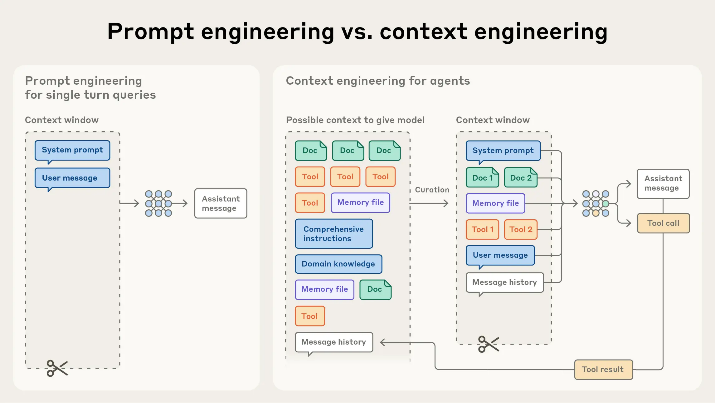
We can analogize this shift within AI systems themselves. In 2022 and 2023, “prompt engineering” was all the rage: What do we ask the LLM to do to get the desired result? Now, as these tools look to orchestrate an increasing amount of material—from different applications, data sources, research platforms, etc.—it’s all about “context engineering.” If prompt engineering drew on our ability to, say, ask a good interview question, the latter is more akin to providing a briefing book for that interview. 

The bottom line? In the AI era, PR pros become sorely needed trust architects who can cement organizational credibility by contextualizing heaps of data—not only to help their clients rise above the noise, but to help them get the most out of today’s AI tools.

Diagram showing the difference between prompt engineering and context engineering in LLMs.
The differences between prompt engineering and context engineering. PR pros are well-positioned to understand what context to give the model—and what guidance to give clients based on its output. (Source: Anthropic )

2. AI-powered LLMs represent a new audience that PR pros know how to reach 

When the release of ChatGPT made LLMs accessible to anyone with a laptop or phone the doomsdayers soon followed. What’s the point of good ol’ fashioned media relations if a bot can write your pitch and traditional search traffic is on the skids? 

Though as with so many “unprecedented” disruptions, the more things change, the more things stay the same. LLMs have fast become just one more audience that organizations need to reach, albeit a critical one. 

Fortunately, it turns out the bots like a lot of the same things as traditional SEO. Chief among them: earned media attention. As noted in a report from comms specialists Hard Numbers and Onclusive  shared during the AMEC conference, LLMs recommend brands with a strong media footprint up to 80% of the time. 

This is what’s new: to rank in the AI era, organizations must pair earned media efforts with owned content that’s optimized for GEO. Listicles, FAQs, and comparison articles push you higher, which is one reason why I’m writing this article (!). GEO-ready webpages—with clear subheads, summary boxes, credentialing, and structured metadata—only bolster these efforts. 

At the same time, as audiences become more attuned to the look and feel of AI-generated content, we can’t forget the human touch. Human-written content still dominates Google’s top rankings, while professional services firms’ businesses are built on human expertise—that is, no one wants to hire a thought leader who doesn’t have any of their own thoughts. As CARMA’s Insights & Consulting Director Jennifer Sanchis put it at the conference, “The future is personal branding and proof of humanity.” 


To sum up, catching LLMs’ attention still requires a human touch to create and share consistent, differentiated messages across numerous channels in ways that AI bots can easily recognize. PR teams are perfectly suited to do just that. 

3. AI creates new PR opportunities 

AI is also generating new opportunities for PR teams and their clients, according to AMEC AI Day presenters. For instance: 

Messaging around AI itself is a new must-have, particularly for B2B firms. A CARMA UK report discussed at the event highlights a crucial trendline: CEOs, more than academics or media or government, are most responsible for driving positive media narratives about AI benefits. 

That’s a real opportunity for professional services firms, particularly seeing as their clients crave guidance on AI and amid ongoing controversies about AI use in the workplace. Yet while 86% of Fortune 250 CEOs regularly reference AI, only half are viewed as credible, according to a new report. Those who link AI to products, customer outcomes, or workforce re-skilling, however, received sentiment scores that are almost four times higher than their peers. 

LinkedIn is full of untapped potential for B2B executives. There was a lot of talk in the early days of LLMs about the need for executives to get on platforms like Reddit to ensure discoverability. But presenters at AMEC’s AI Day conference took pains to illustrate that LinkedIn has made a comeback: as one recent study shows, LinkedIn is now the most-cited domain for professional queries in AI search. 

Erin Lanuti, Co-Founder and CEO of Lilypath, took it a step further, calling on executives to build their “authority intelligence” on LinkedIn by ensuring that AI can accurately interpret one’s professional credibility on the platform. Interestingly, C-suite executives—even those with robust profiles—are often misclassified, in large part because the LLMs are flooded with too much information and don’t know how to sort it. PR teams can help develop execs’ authority intelligence on LinkedIn, while creating the types of content that can further buttress it. 

Proactive crisis comms may soon become a reality. As representatives from LexisNexis pointed out, the big problem for PR is that it is reactive; AI, on the other hand, is built for prediction. 

What might this entail? Could PR teams, equipped with the right data and AI tools, predict potential crises and help business leaders prepare messaging in advance? 

The LexisNexis speakers say yes—and used the collapse of Silicon Valley Bank as one example. Had SVB’s leadership been able to connect the dots between a constellation of data points—financial filings that showed mounting unrealized losses, credit rating downgrades, a Chief Risk Officer vacancy—they might have had six to 12 months of additional lead time before the failure hit.  

The future of PR may look like a (less Tom Cruise-y) version of Spielberg’s Minority Report, where comms teams can stop, or at least prepare for, crises before they happen. 

From Visibility to Credibility: PR’s Next Chapter

In many ways, AI is doing what every major technological shift has done before it: changing how information is created, distributed, and consumed. But it’s not eliminating the need for PR. It’s just raising the stakes.

For B2B organizations, particularly in complex and high-trust sectors like legal and consulting, visibility alone is no longer enough. The firms that win in the AI era will be those that can shape credible narratives, show up consistently across both human and machine-driven channels, and position their leaders as authoritative voices in an increasingly crowded information ecosystem.

November 19, 2024 by Joe Eichner

Crafting a unique, attention-worthy point of view for your professional services firm takes work. And, unfortunately, most thought leaders fall short. They jump into the fray without taking the time to develop well-considered positions of authority that resonate with their audience and direct a smarter conversation. 

Do you know how to find your firm’s unique point of view? 

What you want to say is only one piece of the puzzle. You also need to understand what’s already been said about a topic and what your audience wants or needs to hear. Only then can you figure out what you (and ideally only you!) can bring to the table.

Get started today by downloading our 4-step guide.

August 6, 2024 by Joe Eichner

Too many aspiring thought leaders are more concerned with simply being part of the conversation than adding to it in a meaningful way.

Some may feel an intense pressure to keep pace with competitors, even if they don’t have anything new to say. Others may have plenty to say, but hesitate to speak out for fear of offending stakeholders and losing current and/or future business.

Whatever the reason, this lack of confidence in what to say and when to say it presents a problem. In almost every case, it strips would-be thought leaders of a true point of view — a critical element in establishing and demonstrating authority.

What Are the Hallmarks of a Strong POV? 

At its core, a point of view (POV) is a statement or position that others might disagree with. It’s not merely a statement of fact.

Like a good piece of writing or a coveted dinner guest, a solid POV invites further conversation and sparks new ideas. And like those thesis statements we learned about in middle school, a good POV is evidence of an underlying argument that’s well-constructed and fully considered. One that persuades, excites, and pushes the conversation forward using supporting evidence, engaging storytelling principles, and illustrative examples.

By contrast, what too often passes for thought leadership actually closes conversation off by  repeating what’s already been said, stating the obvious, or saying something patently false or outrageous. 

There is a middle ground here. Just because someone might disagree with a point of view doesn’t mean their response is inherently controversial or combative. They might just be saying, “Hmm, you’d do it this way? Interesting. Here’s why I think you should do it this way instead…”

Alternatively, sometimes a compelling, subjective point of view shines through thanks to the voice and distinct personality of the writer — even if the opinion expressed isn’t intrinsically novel. For example, most movie critics agreed that Moonlight was an exceptional film (see as evidence its 98% rating on Rotten Tomatoes). But just because they all agreed doesn’t render each critic’s review moot. 

Good critics know how to express the same overarching opinion in a new and unique way — by drawing on their individual experiences, layering in interesting historical and industry context, and infusing their prose with a memorable style. These elements set each review apart and open up more space for conversation and debate.

Similarly, a consultant might agree with the majority of her peers that there needs to be more focus on environmental, social, and governance (ESG) considerations at the board level. But she might have her own unique perspective on the best ways to go about it. Or she might offer salient, industry-specific advice on how ESG should be talked about and prioritized. She may even bring first-hand experience to the table (e.g., a stint serving as a consultant in South Africa during apartheid or advising directors who were early ESG adopters) that lets her speak to the issue in a completely different way from everyone else. 

Nobody needs to hear another clarion call about the need to adopt ESG practices at their organization (or read generic content about any other trending topic). But advisors who draw on their own experiences can make the case for ESG — or for the topic at hand — in a way that nobody else is making it.

Put simply, true authorities develop statements and positions that are made more compelling by virtue of their unique perspective.

[Ready to start honing your firm’s unique POV? Download our 4-Step Guide to learn how.]

It’s Time for Professional Services Firms to Develop True POVs

If you’re a marketer or aspiring thought leader at a professional services firm, you may be thinking that this is all well and good in theory, but that the consensus-driven partnership structure of your organization makes it difficult to put any kind of real stake in the ground.  

You’re not wrong. It’s rare to find a lawyer or consultant who wants to go out on a limb and risk offending their partners, clients, or potential clients.

But here’s the rub: Going out on a limb is often what makes the best points of view. (Just look at any newspaper’s most read op-ed pieces.) More to the point, weighing in on the conversations that matter most is exactly what your audience needs from you right now. 

The 2024 EdelmanTrust Barometer reveals that the public’s trust in government, media, and science continues to deteriorate. Conversely, people trust businesses more than they trust these traditional helms of authority. 

As a result, more and more of your stakeholders expect the leaders they trust to speak out and carve out positions of authority about things like: 

  • The increasingly polarized rhetoric around DEI and ESG
  • Geopolitical concerns and their effect on business decisions
  • Social issues that become heightened during election cycles
  • The promise and peril of emerging technologies like AI
  • Generational shifts in the workforce and their impact on recruitment and retention

In pivotal moments, your firm’s silence can speak louder than words. And your lack of response will be particularly noteworthy if your employees, clients, and community stakeholders look to you as a trusted authority and advisor. Abstaining from active, important, timely conversations might make your audience wonder what you stand for. 

By contrast, when you participate skillfully in the conversations that matter, you can reinforce your authority and strengthen your firm’s relationship with your audience.

Greentarget Can Help You Find the POV You’re Looking For

It can be challenging to uncover the positions of authority that will resonate most with your audience — especially if you’ve never taken time to think about thought leadership in this way before. The good news is there’s no need to figure it out alone. 

Greentarget can help you artfully combine your subject matter expertise with the factual rigor and narrative techniques of traditional journalism to produce POVs that align with your business goals — all while communicating what your audience needs to know. 
So when you’re ready to find your firm’s unique voice, let’s talk.

March 8, 2024 by Joe Eichner

Generative AI is already threatening to change our lives and take our jobs—now, it’s coming for search. The implications are scaring content creators, including marketers at professional services firms who worry their experts’ thought leadership will get lost in a sea of AI-generated noise.

They have cause for concern. In addition to AI clogging up Google with more garbage SEO clickbait, search engines’ own generative AI-powered answers could give users all the information they need without requiring a click at all.

It might be tempting to cower in fear; after all, it’s hard enough to break through as it is, and that was when you were just competing against other people. But, as we’ve written before, the emergence of generative AI is actually a significant opportunity for professional services firms. That’s because they specialize in the niche, insightful, and timely perspectives on complex topics that AI, which merely generates content based on what’s already been said, can’t mimic.

Remember, the audiences that professional services firms want to reach (i.e., executive decision-makers) aren’t going to base multimillion-dollar decisions on four bullets spat out by an AI-powered search engine. They want strategic counsel from trusted authorities whose content shows they know what they’re talking about. And as you’ll see below, that kind of high-quality content still rises to the top.

What’s Actually Happening to Search?

It’s important to first clear up some common misconceptions about the current state of search. Namely: generative AI—and/or the use of generative AI in developing an article—won’t cause a drop in search rankings on its own.

Google’s SEO rules still apply, however complicated or ever-changing they may be. In fact, just this week Google announced adjustments to its search algorithm aimed at surfacing high quality, helpfulcontent over spammy, recycled results—effectively taking aim at content produced for the sole purpose of ranking highly.  

Yet even as Google looks to limit low-quality content, existing SEO best practices—particularly those that help to balance readability and searchability—should still be applied. At their core, these include:

  • Make your site accessible, fast, and optimized for mobile.
  • Use multiple subheads that align with what people need to know and are searching for.
  • Strategically weave in relevant, “winnable” keywords (those that balance search volume and ranking difficulty), and use clear, simple prose when possible.
  • Demonstrate expertise, experience, authority, and trust (EEAT)—for instance, by citing links, firsthand examples, and drafting substantive bios for contributors.

In short, the quality of content being produced is still, and perhaps increasingly, a critical factor in SEO, whether you’re using generative AI to help you write it or competing with other AI-produced articles.

“We’ve given longstanding guidance to create content that’s first and foremost helpful, and we work very hard to ensure that our ranking systems reward content designed for people first. Many sites perform well on Search simply by creating this helpful content, without undertaking extensive SEO efforts,” Google spokesperson Jennifer Kutz told The Verge this January.

The real concern, then, is generative AI-powered tools offered by Google itself, which they’ve started to rollout through its “search generative experience” experiment, which summarizes results and presents it as the top answer. Worries follow: for instance, why go to a law firm’s article describing a new regulation when Google can answer the question itself?

On the other hand, as noted above, leading executives will make hiring decisions based on more than whether or not you can merely describe a new regulation. They’ll want to see that professional services firms can provide unique insights, points-of-view, or guidance in light of that regulation. Generative AI can’t replicate that.

The Opportunity for Professional Services Firms

So what will help your content rise in the search rankings?  

Making it helpful and relevant. Ensuring it showcases expertise and experience. Using keyword research to identify targeted, but relevant search terms. Deploying clear, concise, and easy-to-follow prose. And making sure you’re talking about something unique and complex enough that it can’t be simply (or merely) answered or summarized by a robot.

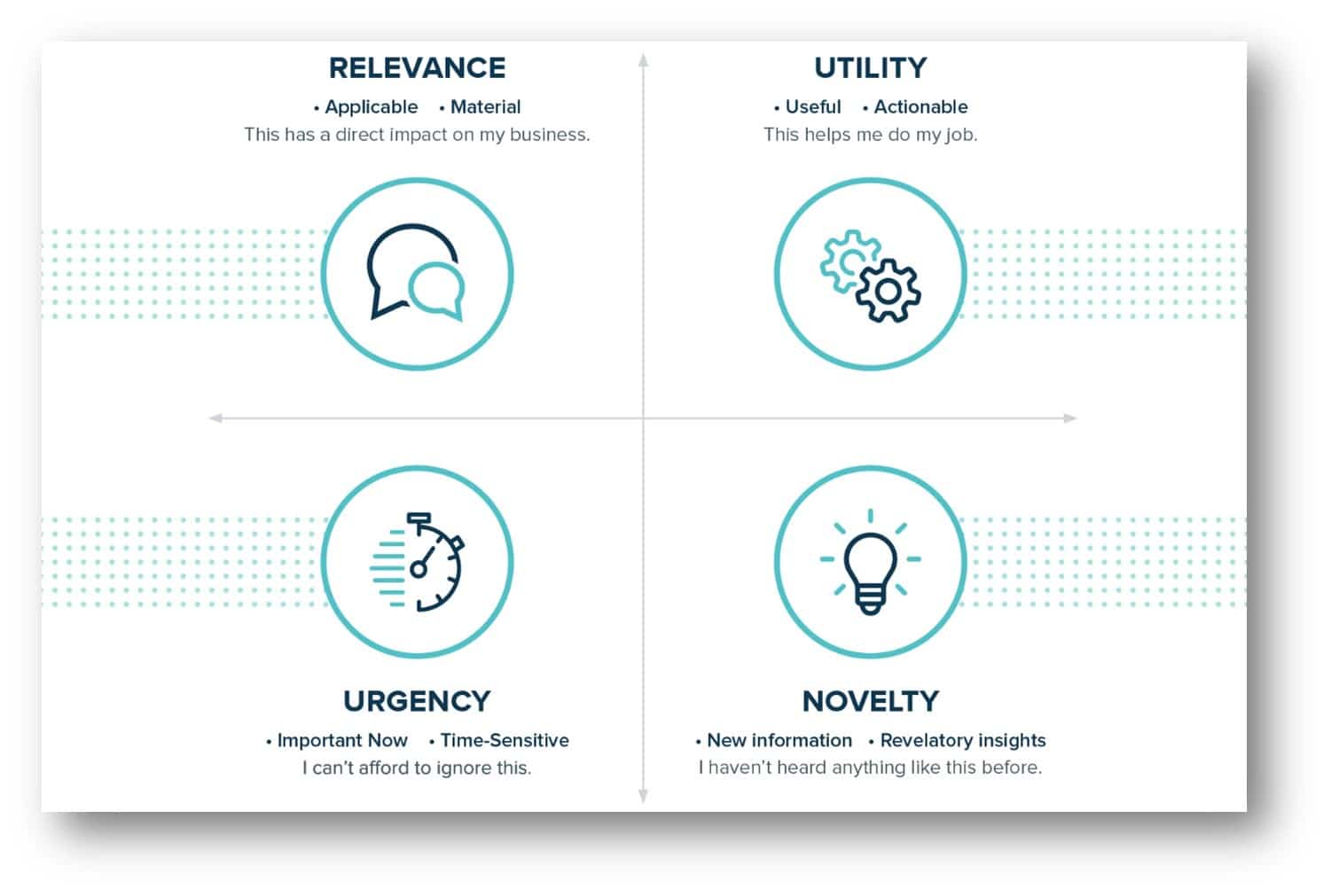
This is familiar to us at Greentarget. After all, our North Star for strong thought leadership content has long been this matrix, highlighting the importance of relevancy, urgency, uniqueness, and utility:

Each day, we work with professional services firms to do just this. Our research team helps uncover winnable search terms that fill white space, ensuring our clients are speaking on timely topics that aren’t saturated with existing content—AI generated or not.

Our content team distills complex insights into clear, engaging prose, drawing out what’s most useful to key audiences and highlighting experts’ firsthand experience and unique perspectives. And our digital team optimizes those pieces for search, be it beefing up contributor bios, identifying strong keywords or revising subheads and headlines.

This has led to a timely IPO readiness guide discussing tax and accounting challenges for prospective public companies, an award-winning research report on M&A disputes, and countless bespoke topics that our media relations team has leveraged to secure highly visible opportunities for our clients—all of which drive real referrals and website traffic.  

To sum up, here’s a quick primer:

  1. Showcase Expertise / Experience – Author bios with details on qualifications and well-researched content that demonstrates a deep and unique understanding of a topic.
  1. Manage / Build Authority – Ensure your existing online reputation is strong. With each article, try to increase the number of backlinks and sources citing the piece, and encourage sharing and engagement.
  1. Be Trustworthy – Be factual and accurate, cite trustworthy sources, make your content is accessible, and focus on quality content.

And remember the new golden rule: if generative AI can already say it, maybe you don’t need to say it at all. Quality content, that which is truly novel, distinctive and timely, still reigns supreme.

The Importance of Owned Content in the AI Era

Eventually, generative AI may cause organic search traffic to plummet on all but the most niche topics. Yet, as we’ve discussed above, this is an opportunity for professional services firms and thought leaders to stand out in a crowd: by creating unique and insightful content that only they can, based on their firsthand knowledge and experience.

But that’s not the only opportunity. In fact, as AI threatens already-struggling newsrooms, the importance of owned thought leadership content only grows. Fewer outlets and the declining viability of those outlets to rank high in search underscores the potential of owned content—be it a branded digital magazine, feature style articles and whitepapers, research reports, blogs, or LinkedIn posts.

These platforms put marketers back in the driver’s seat, empowering them to deploy targeted distribution strategies (e.g., email newsletters, paid social, even print) that are not (solely) at the whim of Google’s ever-fluctuating SEO rules. They can even complete the circle and provide fuel for earned media opportunities. Our IPO readiness guide, for instance, led to a byline opportunity for our client in TechCrunch.

To learn more, contact our team here.

December 5, 2023 by Joe Eichner

No matter what business you’re in, everyone’s talking about the promise—and peril—of artificial intelligence.

But as executives weigh the efficiency of AI against cybersecurity and other risks, they must remember one key fact: AI is also a communications challenge.

Meeting that challenge requires balancing the need for transparency and guidance with the agility and flexibility necessary to keep pace with a swiftly evolving technology. This is especially important for leaders at professional services firms, whose reputations can depend on providing authoritative counsel on emerging issues like generative AI—which, unlike traditional AI, uses unsupervised models to create new content and data.

In what follows, we’ll assess the current AI landscape for professional services firms and map out the communications obstacles (and opportunities) those organizations may encounter as the technology advances.

AI in Professional Services: New Opportunities, New Concerns

From legal to consulting and accounting firms, professional services providers are tapping into the power of AI to help speed workflows, improve efficiency, and generate data-driven insights.

Internally, our law firm clients have already been using AI and machine learning for functions like eDiscovery—and some are now testing out generative AI in content creation (e.g., job postings, social media posts, document production). Consultants and accountants are using it for everything from predictive analytics to automation of back-office functions and more. At the same time, these firms are also bringing AI into in client-facing offerings: consulting on legal and operational risks related to the technology, helping organizations adopt AI themselves, and/or deploying it to improve client processes and services.

For professional services organizations, it’s not only an efficiency play—it’s also a business imperative, one that clients are increasingly demanding as they look to lower outside spend and operational costs. As one GC told us, “Law firms should be figuring out how they’re going to use AI tools to help their clients rather than sticking their heads in the sand and saying it would be inappropriate for us to use them.”

It tracks, then, that in a recent survey by our client Womble Bond Dickinson, only 13% of executives (including those from professional services firms) said that they are not investing in AI or are unsure; over half are already making investments or plan to do so in the next year. Asked about key obstacles around the use of AI, respondents cited issues including ethical concerns, a lack of understanding about AI, legal risks, costs, and a lack of qualified personnel.

But these aren’t the only concerns for professional services firms. Some GCs want their outside counsel to use ChatGPT to lower billable costs, while firm leaders are worried about the impact of generative AI on training the next generation of talent. The evolving regulatory environment also poses potential issues, though as a new Littler survey notes, most employers have not changed their AI usage as a result.

Key Executive Positioning Challenges

As demonstrated by the above, professional services firms, like other businesses, are moving forward with AI despite widespread risk and uncertainty.

Communication from the top—be it internal policies and guidance or external stakeholder communications (e.g., with vendors, clients, investors, talent, etc.)—is therefore critical. Yet only 37% of the HR professionals and in-house counsel that Littler surveyed report providing policies or guidance to employees on the proper use of AI tools in the workplace. The majority are also underutilizing AI vendors or outside counsel to assess risk.

Clearly, there’s room for improvement. As we learned during the pandemic, moments of flux demand proactive, transparent, and authentic communication. Better to overcommunicate, even if you don’t have all the answers, than leave stakeholders guessing.

Here are a few questions executive communicators should be asking themselves when it comes to AI:

  • Cyber/privacy risk. Do you have a communications plan in place as part of a broader cyber incident response strategy? How are you communicating to external stakeholders about the steps you’re taking to safeguard their data and privacy with new AI tools? How are you delivering guidance to those using AI tools within your organization?
  • Policies. Do you have a usage policy for generative AI (and/or other AI tools)? Are you effectively communicating that to your employees in a way that balances brevity, support for employees, and risk mitigation? Is there a steady cadence of communications to ensure these policies are implemented?
  • Talent. As AI use stokes fears about job displacement—one Goldman Sachs study says generative AI could automate almost half of legal tasks—how are you communicating to current and prospective employees about how AI tools can help them in their work? How are you ensuring effective interpersonal communication between mentors and mentees as technologies like AI continue to throw up obstacles to in-person connections?
  • Operations. Given the range of different functions AI will impact across your business, are you convening the right group of people to make these communications decisions? Who should be involved, and when? Is there a process in place to communicate quickly and with flexibility?
  • Business goals. Perhaps most importantly, are you proactively articulating the value of AI to your employees, clients, and other stakeholders (e.g., how it might cut down on costs or free up bandwidth for more creative or substantive work)? How does it align with your overarching business objectives?

When it Comes to Communicating About AI, There’s No Time Like the Present

AI will change the nature of professional services work. But how your clients, employees, and other stakeholders react to these changes is up to you. Proactive, transparent, and authentic communications—utilizing clear, consistent, focus-group-tested messaging—can build trust in moments of flux and uncertainty.

Now is the time to get started. Learn more about how Greentarget can help by clicking here.

About the Executive Positioning Practice Exemplifying Greentarget’s commitment to being a trusted advisor to clients, Greentarget’s Executive Positioning team provides c-suite executives (managing partners, CEOs, executive committees, and boards) with insights to anticipate, understand and respond to important global and social developments, analyzing key issues that can impact reputation and compel leaders to communicate.


  • Page 1
  • Page 2
  • Go to Next Page »

Footer

Connect with us

To reach us by phone, call 312-252-4100.

close
  • We take your privacy seriously. We do not sell or share your data. We use it to enhance your experience with our site and to analyze the performance of our marketing efforts. To learn more, please see our Privacy Notice. Would you like to receive digital marketing insights in your inbox? We'll send you a few emails each month about our newest content, upcoming events, and new services.
  • Our Culture
  • Industries
  • Services
  • Insights
  • Our Manifesto
  • About Us
  • Contact Us
  • Privacy Notice
Close
Close