

April 28, 2026
Why PR Matters in the AI Era: Three Takeaways for B2B Communications Leaders on GEO, Trust, and LLM Visibility


AI isn’t replacing PR. It’s reshaping it. Insights from AMEC’s North American AI Day reveal that, for B2B communications teams, success now depends on building trust, optimizing for generative engine optimization (GEO), and positioning executives as credible voices across AI-influenced channels.
When Microsoft released its landmark study, Working with AI: Measuring the Applicability of Generative AI to Occupations, detailing the careers most likely to be affected by generative AI, PR specialists landed in the (unfortunate) top 25, ranking a few decimal points worse than geographers and brokerage clerks—and not far behind writers, historians, and translators, who topped the list.
Who can really argue? After all, three in four PR pros have already incorporated AI into their workflows, according to Muck Rack’s The State of PR 2025 report, up from 28% in 2023. At Greentarget, our team uses one AI tool for trends research and writing support, another for automated notetaking, and still others for reporting and measurement.
Though AI may not be “replacing” us as many fear, its widespread adoption does beg the question of what the unique value of experienced B2B PR teams will be as traditional search traffic declines, newsrooms lay off staff, and anyone with a laptop can publish AI-generated content.
To find some answers, I went to the International Association for Measurement and Evaluation of Communication’s (AMEC) latest AI Day conference in New York—and discovered that, rather than rendering us redundant, today’s AI-powered business landscape may just make PR more important than ever.
Here are three key reasons why.
1. PR pros are the “trust architects” of the AI era
Hype cycles tend to make ambitious promises, and generative AI is no different. Who needs a PR agency—or a writer, or even a geographer—with this genius-seeming chatbot at your fingertips?
Plenty of people, it turns out (or I, for one, would not be writing this right now). After all, PR pros have always been in the business of shaping or directing storylines from the swirling flow of news, gossip, data, and rhetoric. Ideally, as the “father of PR” Ivy Lee noted back in 1906, this work occurs out in the open, with accuracy, and in the public interest: if you can’t trust the source, it all falls apart.
One way of looking at PR’s role, then—especially in a moment where credibility is harder and harder to come by—is as a reliable filter for the deluge of information hitting our inboxes and feeds each and every day. PR pros can tell clients (and their key audiences) what it all means, why it’s important, and how we should engage with this information.
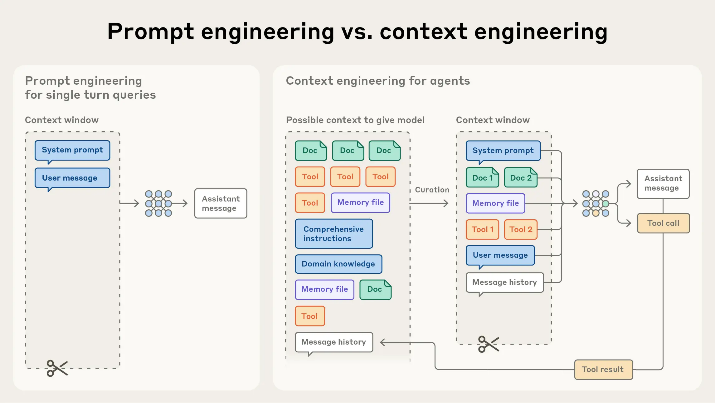
We can analogize this shift within AI systems themselves. In 2022 and 2023, “prompt engineering” was all the rage: What do we ask the LLM to do to get the desired result? Now, as these tools look to orchestrate an increasing amount of material—from different applications, data sources, research platforms, etc.—it’s all about “context engineering.” If prompt engineering drew on our ability to, say, ask a good interview question, the latter is more akin to providing a briefing book for that interview.
The bottom line? In the AI era, PR pros become sorely needed trust architects who can cement organizational credibility by contextualizing heaps of data—not only to help their clients rise above the noise, but to help them get the most out of today’s AI tools.
2. AI-powered LLMs represent a new audience that PR pros know how to reach
When the release of ChatGPT made LLMs accessible to anyone with a laptop or phone the doomsdayers soon followed. What’s the point of good ol’ fashioned media relations if a bot can write your pitch and traditional search traffic is on the skids?
Though as with so many “unprecedented” disruptions, the more things change, the more things stay the same. LLMs have fast become just one more audience that organizations need to reach, albeit a critical one.
Fortunately, it turns out the bots like a lot of the same things as traditional SEO. Chief among them: earned media attention. As noted in a report from comms specialists Hard Numbers and Onclusive shared during the AMEC conference, LLMs recommend brands with a strong media footprint up to 80% of the time.
This is what’s new: to rank in the AI era, organizations must pair earned media efforts with owned content that’s optimized for GEO. Listicles, FAQs, and comparison articles push you higher, which is one reason why I’m writing this article (!). GEO-ready webpages—with clear subheads, summary boxes, credentialing, and structured metadata—only bolster these efforts.
At the same time, as audiences become more attuned to the look and feel of AI-generated content, we can’t forget the human touch. Human-written content still dominates Google’s top rankings, while professional services firms’ businesses are built on human expertise—that is, no one wants to hire a thought leader who doesn’t have any of their own thoughts. As CARMA’s Insights & Consulting Director Jennifer Sanchis put it at the conference, “The future is personal branding and proof of humanity.”
To sum up, catching LLMs’ attention still requires a human touch to create and share consistent, differentiated messages across numerous channels in ways that AI bots can easily recognize. PR teams are perfectly suited to do just that.
3. AI creates new PR opportunities
AI is also generating new opportunities for PR teams and their clients, according to AMEC AI Day presenters. For instance:
Messaging around AI itself is a new must-have, particularly for B2B firms. A CARMA UK report discussed at the event highlights a crucial trendline: CEOs, more than academics or media or government, are most responsible for driving positive media narratives about AI benefits.
That’s a real opportunity for professional services firms, particularly seeing as their clients crave guidance on AI and amid ongoing controversies about AI use in the workplace. Yet while 86% of Fortune 250 CEOs regularly reference AI, only half are viewed as credible, according to a new report. Those who link AI to products, customer outcomes, or workforce re-skilling, however, received sentiment scores that are almost four times higher than their peers.
LinkedIn is full of untapped potential for B2B executives. There was a lot of talk in the early days of LLMs about the need for executives to get on platforms like Reddit to ensure discoverability. But presenters at AMEC’s AI Day conference took pains to illustrate that LinkedIn has made a comeback: as one recent study shows, LinkedIn is now the most-cited domain for professional queries in AI search.
Erin Lanuti, Co-Founder and CEO of Lilypath, took it a step further, calling on executives to build their “authority intelligence” on LinkedIn by ensuring that AI can accurately interpret one’s professional credibility on the platform. Interestingly, C-suite executives—even those with robust profiles—are often misclassified, in large part because the LLMs are flooded with too much information and don’t know how to sort it. PR teams can help develop execs’ authority intelligence on LinkedIn, while creating the types of content that can further buttress it.
Proactive crisis comms may soon become a reality. As representatives from LexisNexis pointed out, the big problem for PR is that it is reactive; AI, on the other hand, is built for prediction.
What might this entail? Could PR teams, equipped with the right data and AI tools, predict potential crises and help business leaders prepare messaging in advance?
The LexisNexis speakers say yes—and used the collapse of Silicon Valley Bank as one example. Had SVB’s leadership been able to connect the dots between a constellation of data points—financial filings that showed mounting unrealized losses, credit rating downgrades, a Chief Risk Officer vacancy—they might have had six to 12 months of additional lead time before the failure hit.
The future of PR may look like a (less Tom Cruise-y) version of Spielberg’s Minority Report, where comms teams can stop, or at least prepare for, crises before they happen.
From Visibility to Credibility: PR’s Next Chapter
In many ways, AI is doing what every major technological shift has done before it: changing how information is created, distributed, and consumed. But it’s not eliminating the need for PR. It’s just raising the stakes.
For B2B organizations, particularly in complex and high-trust sectors like legal and consulting, visibility alone is no longer enough. The firms that win in the AI era will be those that can shape credible narratives, show up consistently across both human and machine-driven channels, and position their leaders as authoritative voices in an increasingly crowded information ecosystem.
Related Posts
-

It was a pretty impressive maneuver. When Kentucky Fried Chicken ran out of fried chicken…
-

If you’re lucky enough to have seen Hamilton, the Broadway megahit penned by Lin-Manuel Miranda,…
-

In 2017, as the popularity of podcasts continued its incredible growth – 42 million Americans now listen…