

April 10, 2026
AI Search, Journalism’s Reset, and the New Rules of Professional Services Visibility


Search traffic is declining, AI is rewriting discovery, and publishers are evolving. Here’s how firms can build authority, visibility, and credibility in the new media landscape.
Journalism is facing a near-existential challenge. Legacy newsrooms are contracting, search traffic is eroding, and AI is rapidly reshaping how people find and consume information.
According to the latest report from the Reuters Institute for the Study of Journalism, publishers expect search referrals to fall by more than 40% over the next three years. At the same time, audience behavior has fundamentally changed: Half of the news readers surveyed by marketing agency Tier One last year now cite social media as a primary news source, with that figure climbing sharply among younger audiences.
On the surface, this all may sound bleak. But taken together, these shifts don’t signal the end of journalism. They signal a reset. The professional services and PR firms who understand this new landscape will be well-positioned to use it to their advantage in gaining influence in the AI era.
How Publishers are Responding—and the Opportunity for Credible Voices from Professional Services Firms
Crucially, the aforementioned Tier One report shows that audiences aren’t abandoning trusted media. Instead, they’re looking towards multiple sources, from local and broadcast news to social media to traditional print and online outlets, as well as a fast-growing ecosystem of independent journalism on platforms like Substack.
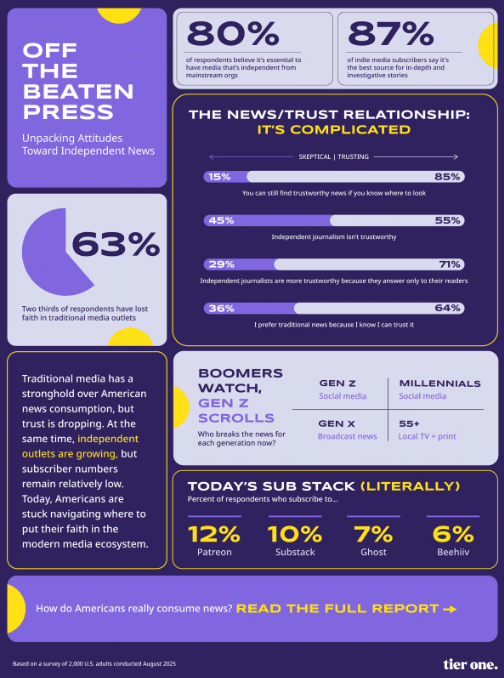
In other words, people still want credible information. But they don’t want it from a single source or in a single format. And that insight is reshaping publisher strategy, creating new opportunities for subject matter experts in the professional services realm. Consider the following:
Publishers are ensuring their content has a human touch, including the use of subject matter experts.
“If we want to win the trust of our readers back, and their clicks along with it, we must lean instead into what AI cannot be: human,” said Susie Cagle, enterprise editor of The San Francisco Standard, in her Nieman Labs media prediction for 2026. “That means providing readers not just with news they know is real and sourced, but with unique storytelling, experience, community, and connection.”
Publishers are choosing depth over scale.
Rather than trying to out-optimize algorithms or chase back lost traffic, media outlets are pivoting to fewer stories, more original reporting and analysis, and stronger audience relationships through subscriptions, newsletters, events, podcasts, and owned channels.
Naturally, experts with sharp perspectives and insights will be invaluable to fleshing out such in-depth reportage.
“Journalism’s best response is to double down on the things that make us valuable and unique,” Taneth Evans, Head of Digital at The Wall Street Journal, says in the Reuters Institute report. “This year has seen most waking up to the importance of quality, originality, and direct, meaningful relationships with our audiences.”
Publishers are turning to new formats, creating more venues for B2B SMEs to share a compelling POV.
According to the Reuters Institute Survey, nearly 80% of publishers plan to invest more in video; more than 70% said the same about audio formats. Both, after all, are harder for AI to scrape, summarize, and commoditize.
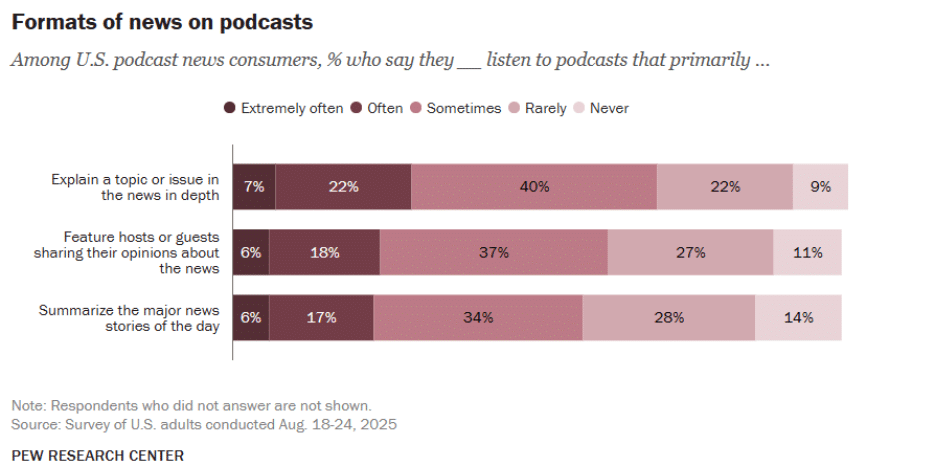
Podcasts in particular offer an excellent (and intimate) format for thought leadership and credible B2B voices. A 2025 Pew Research study found that about a third of U.S. adults get their news from podcasts at least some of the time. In this group, most listen to three types of podcasts: ones that primarily explain a topic or issue in the news in depth; ones that feature hosts or guests sharing their opinions on the news; and ones that primarily summarize the major news stories of the day—all areas where thoughtful and media-trained SMEs can weigh in.
Earned Media Shapes AI Discoverability
Despite declining traditional search traffic, earned media opportunities for professional services firms—like those noted above—still matter in the AI era.
According to a recent Muck Rack report, roughly a quarter of AI citations come from journalistic sources, with the rest drawn from unpaid, third-party coverage. Even press releases are cited more often when they’re data-driven, clearly written, and objectively framed.
Two signals matter most to large-language models:
- Authority: both overall outlet reputation and topic-specific credibility
- Recency: AI strongly favors fresh, trustworthy information
In sum, PR and earned media outreach doesn’t disappear in an AI-first world. Where and how brands earn credibility increasingly determines not only media visibility but also how they appear in AI-generated answers.
In the AI Era, Expertise Isn’t Dead. It Just Has to be Demonstrated
Whether writing a quick quote or investigating a complex technical issue, journalists must constantly decide whose knowledge is relevant, how much authority to grant it, and how to present it responsibly to the public.
Given the current media environment—where politicians, creators, and influencers are increasingly dismissive of experts—journalist Jon Kåre Time felt the timing was right to research how journalists can improve their relationships with such experts.
His big takeaway? In today’s climate, credentials alone no longer grant authority. Experts are increasingly politicized or dismissed, and trust must be earned in public. In short, authority isn’t assumed; it needs to be demonstrated.
This is good news for Greentarget’s professional services clients, given that creating positions of authority is our specialty. We counsel our clients on actionable steps they can take to be heard in a way that helps audiences discover solutions to complex business problems and create door-opening conversations with reporters (and prospective clients).
What This Means for B2B Leaders
In an AI-saturated environment, the brands, firms, and voices that break through are those that are aligned with what publishers value now: originality, human judgment, and relevance.
The B2B organizations that succeed next year will do the same, investing in depth over noise and playing the long game in a landscape where trust is the most valuable asset left.
For PR practitioners like us, the new playing field means a return to the basics when building relationships with reporters. AI tools can assist with pitching and research, but relationship building remains human work. In 2026, we will prioritize empathy and connection, taking time to understand a reporter’s interests, anticipate their coverage plans, and offer actionable insights from authorities that will resonate with their target audiences.
For law firms, consultancies, and other professional services organizations, the opportunity lies in helping readers understand what’s known, what isn’t, and why it matters right now—while imbuing insights with a genuinely human, authentic touch.
As journalism hits the reset button, the most effective spokespeople won’t just deliver rote answers. They’ll show they’re thinking. Greentarget can help.
Related Posts
-

In times of economic uncertainty, client retention is of paramount importance. After all, when there’s…
-

As we all continue to navigate the unprecedented leadership challenges and opportunities created by the…
-

A strong reputation helps a firm stand out and remain competitive. Some clients may ask…